
'Our goal is to leave this relationship in a fundamentally different place than it was when President Obama took office and when Prime Minister Modi took office and we believe that we have a unique moment of opportunity to have that kind of breakthrough.'

'The Modi government will do well to thrash out a national consensus before taking the leap and put itself in America's pouch,' says Rajeev Sharma.

Interestingly, in his entire remarks, Modi never once mentioned regional security, Ambassador M K Bhadrakumar points out.

In remarks titled 'Implement Consensus and Handle Differences Properly to Bring China-India Relations Back on the Right Track' posted on the Chinese embassy website, Sun spoke of disruptions in the bilateral relationship and outlined five steps to clarify 'some fundamental points'.
The talks for normalising trade had begun in November 2011.
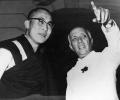
One priority for Delhi (for the new foreign secretary in particular) is to have an in-depth discussion with Dharamsala as soon as possible, suggests Claude Arpi.

President Xi said that the Chinese side is ready to work with the Indian side to carry forward the fresh impetus of bilateral relations.

'This is such a dynamic time for our entire community.' Ami Bera tells Aziz Haniffa/Rediff.com what his selection means for desis in America.
The G20 summit has failed to heal the rift over US plans for military action against the embattled Syrian regime, as American President Barack Obama and his Russian counterpart Vladimir Putin could not reach consensus on Friday during "candid and constructive" talks.

This is the time when the US would need the conceptual strategic thinking of a Henry Kissinger, able to ally diplomatic skills with a well-conceived worldview of what the emergence of a new balance of forces will mean for a US whose ability to shape global events has definitely declined but still exists, says Claude Smadja.
'This Chinese behaviour we have not seen for a very long time.' 'This sort of build up on the border, this pattern in Chinese behaviour, and especially the aggression and brutality with which our people were attacked on the 15th of June, this is not something we have seen before.'

Three weeks after taking over, Prime Minister Narendra Modi will travel to Bhutan on Sunday on his first foreign visit to demonstrate the "special token of friendship" for the country.

Key to China's decision regarding Taiwan will be its leadership's assessment whether the US will come to Taiwan's defence, explains Jayadeva Ranade, the former senior RA&W officer and China expert.

In the first highest level face-to-face contact between the two sides after border tension erupted in eastern Ladakh in early May, Singh and Wei met for two hours and 20 minutes in Moscow on Friday evening on the sidelines of a meeting of the defence ministers of the Shanghai Cooperation Organisation.

Indian-Americans can make a "significant difference" in helping first ever woman United States presidential candidate Hillary Clinton break the ultimate glass ceiling.

India and China decided to seek a fair and rational solution to their border dispute on Saturday as they focused on the proposed border defence cooperation agreement to avert incursions like the one witnessed in Leh region last month.

The focus of the talks will be to ensure mutual development and expanding overall ties, diplomatic sources said.
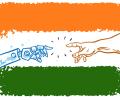
'It is in electronics that the gap between where we are and where we need to be is most obvious and most persistent.' 'It is not only a national security issue, but also a commercial issue,' argues Rajeev Srinivasan.
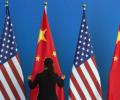
Chinese observers believe the Sino-US relationship will be impacted by issues in North Korea, Japan, India, Ukraine and Iran and that conflicts with these 'third parties' will without exception ultimately become conflicts between China and the US, points out former RA&W officer Jayadeva Ranade.
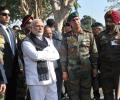
'The attack on the Pathankot base constituted an act of war. Yet Modi's only public comment up until now on that attack has been to blame it on "enemies of humanity".' 'Modi came to power talking tough about Pakistan. But in office, he has pursued a Pakistan policy that has lost both direction and purpose,' argues Brahma Chellaney.
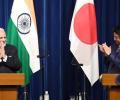
'Relations between India and Japan are robust and devoid of either shadow of history or any irritant.' 'In fact, there is plenty of warmth and goodwill earned over history. There are no negatives but only opportunities,' notes Dr Rajaram Panda.

Prime Minister Narendra Modi held a special interaction with Chinese media persons in New Delhi on the eve of the visit of Chinese President Xi Jinping where he summarized the possibilities of Sino-India bilateral ties.
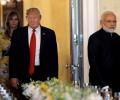
'China was the elephant in the Oval Office and Trump would have sensed that Modi's foreign policy architecture has become disoriented sans the US' pivot to Asia,' points out Ambassador M K Bhadrakumar.

'If the dimensions of the strategic partnership worked out by India and the US seem like a grand alliance targeted at you-know-who, China had better realise that it has fathered it,' says B S Raghavan, a long time observer of China.


A war hero looks back at the men and the moments that forged India's greatest military victory.

'Here was a man who played a major part in helping the Bengalis of East Pakistan create a new nation, secured the merger of Sikkim into the Indian dominion and built R&AW into a formidable outfit, comparable to the best in the world.' Rameshwar Nath Kao shunned the limelight, hated to be photographed and preferred to work behind the scenes. A revealing excerpt from Nitin A Gokhale's much awaited book, R N Kao: Gentleman Spymaster.
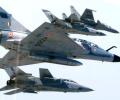
'We could quibble with each other whether there were 25 terrorists killed or 250 killed.' 'The message is more that India undertook such an aerial attack and this attack has actually changed the paradigm.' 'The change in paradigm is that India has shown by the surgical strike in 2016 and the aerial strike of 2019 that we will not just sit back and tolerate terrorism which killed so many of our people.' 'We will hit back and by hitting back we will raise the costs of such activities.'
.jpg)
The Indian Army must be given a free hand to retaliate punitively at one or more places of its choosing on the LoC. The aim should be to cause maximum damage to the forward posts of the Pakistan army, particularly those through which recent attacks have been launched, thereby raising the cost for the army, says Gurmeet Kanwal.

'If, as appears to be the case, India is on way to 'mending fences' with China, and China is equally desirous to 'reset' the relationship, this could be a self-reflexive moment in India's positioning vis-a-vis not just the Dalai Lama, but also the Tibetan issue and China as a whole,' points out China expert Alka Acharya.
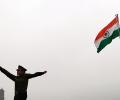
'Our political leadership needs to grasp that there is a difference between a soldier, policeman, trained private security guard and a chowkidar, though all of them provide security.' 'The cross border raids by the army could not be taken by the Central Reserve Police Force, for sure!'

'The US-India relationship is in a different league altogether,' Obama administration officials tell Aziz Haniffa/Rediff.com in Washington, DC.

'Pakistan's recent utterances and tendency to use pinpricks to try our patience appear reminiscent of 1965. We are a strong nation, emerging stronger,' says Lieutenant General Syed Ata Hasnain (retd).
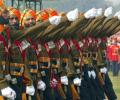
The average Indian soldier remains as hardy as before but he is certainly confused with the pace of change occurring all around him. It is here that the leaders -- the officers -- will have to adapt themselves to the new reality, says Nikhil Gokhale
 © 2026 Rediff.com - Advertise with us - Disclaimer - Privacy Policy - Sitemap - Feedback - About us - Terms of use - Grievances